
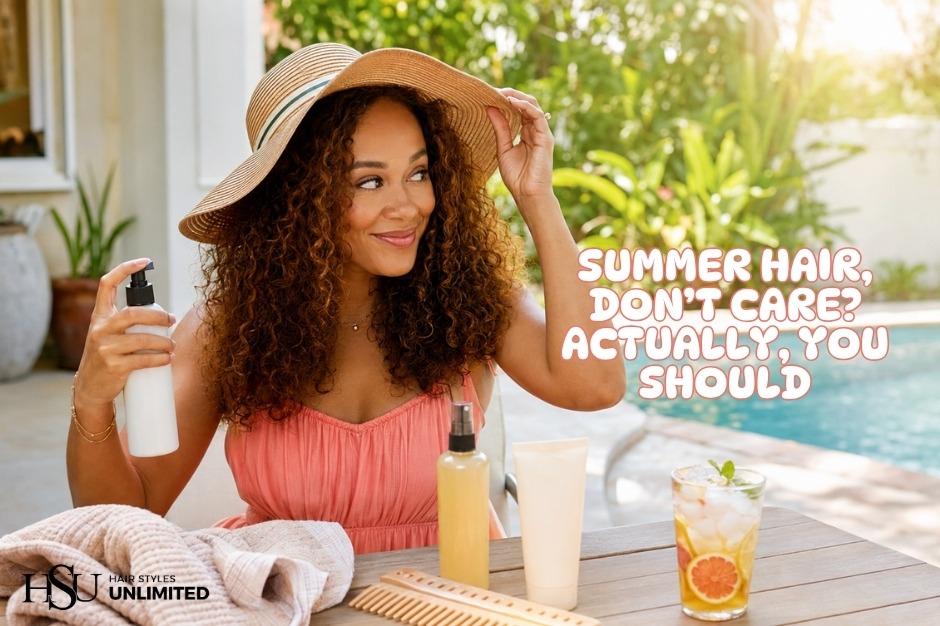
Summer Hair, Don’t Care? Actually, You Should
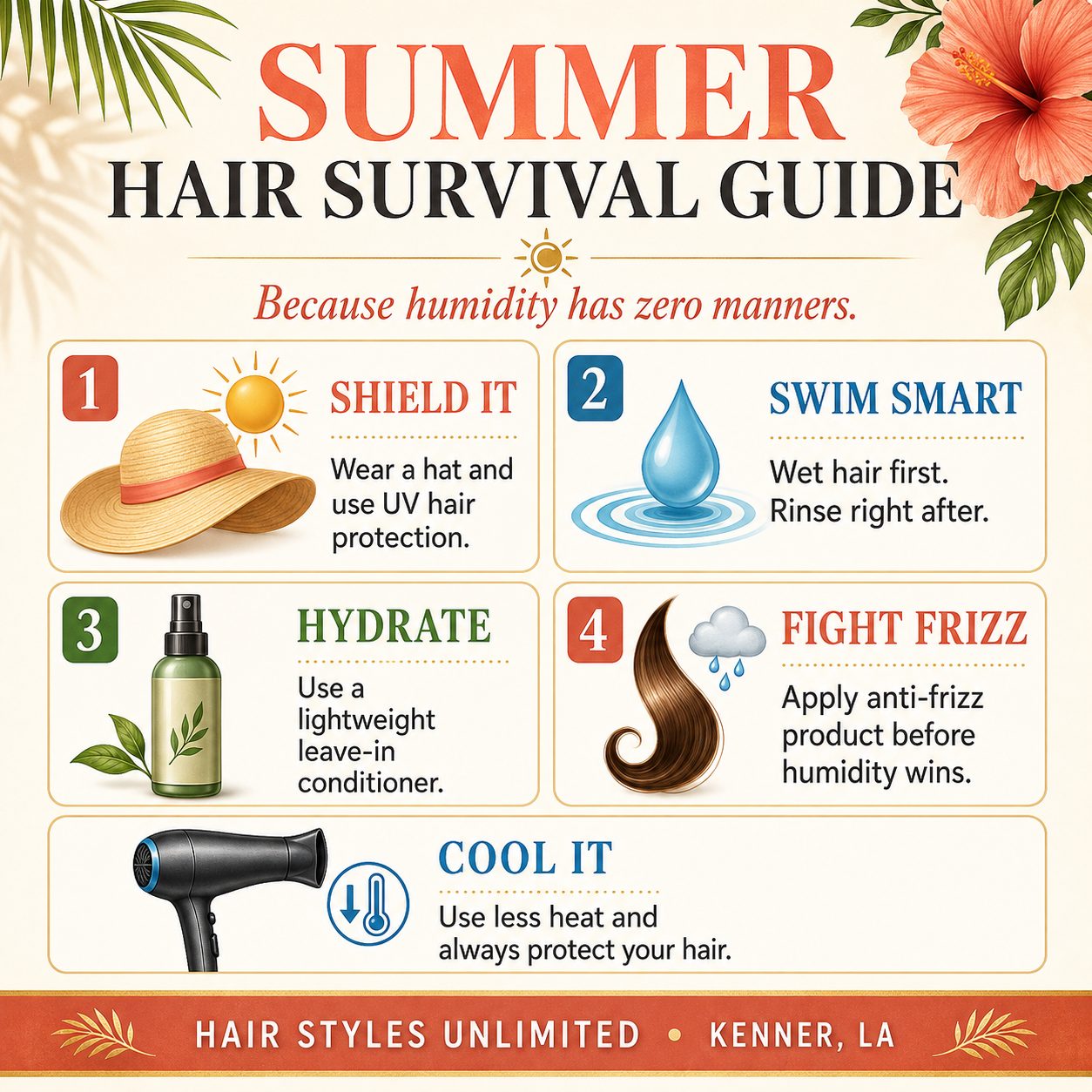 10 Pro Tips to Keep Your Hair Looking Great Between Salon Visits
Summer hair should look effortlessly beachy, not like a broom that spent three days floating in the neighborhood pool.
Sunlight, chlorine, sweat, humidity, wind and extra heat styling can leave hair dry, brittle, frizzy or more prone to breakage. Ultraviolet light can damage hair proteins and alter color, while chlorine can weaken the protective lipids surrounding the hair shaft. (American Academy of Dermatology)
The good news is that you do not need a bathroom full of expensive products or a chemistry degree. A few smart habits can help protect your hair, preserve your salon results and keep everything more manageable until your next appointment.
1. Give Your Hair Some Shade
Your hair cannot order its own umbrella drink, so you need to provide the shade.
When you will be outside for an extended period, wear a wide-brimmed hat or spend more time in shaded areas. Some leave-in conditioners and hair products also contain ingredients designed to provide UV protection. (American Academy of Dermatology)
If you have thinning hair or a visible part, protect the exposed scalp with a broad-spectrum, water-resistant sunscreen rated SPF 30 or higher, or cover it with a hat. Reapply sunscreen every two hours and after swimming or heavy sweating. (American Academy of Dermatology)
Pro tip: Keep a lightweight hat in your car, beach bag or purse. Your hair color and scalp will appreciate it, even if your hat hair does not.
2. Do Not Enter the Pool Empty-Handed
A swim cap provides the most direct protection from chlorinated water. If a swim cap is not part of your personal fashion journey, apply a small amount of leave-in conditioner or appropriate hair oil before entering the pool. This can create a physical barrier between the hair and chlorinated water. (American Academy of Dermatology)
Pro tip: Keep a small leave-in conditioner in your pool bag. Think of it as sunscreen for your hair, minus the awkward request to have someone apply it to your back.
3. Rinse Immediately After Swimming
Do not let pool water dry into your hair while you lounge for another three hours.
Rinse your hair with fresh water as soon as possible after swimming. The American Academy of Dermatology also recommends using a swimmer’s shampoo after pool exposure, followed by a deep conditioner to help restore moisture. (American Academy of Dermatology)
This is especially important for blond, highlighted or gray hair. Chlorine can interact with copper in pool water, contributing to the dreaded greenish tint. (American Academy of Dermatology)
Pro tip: If your color changes after swimming, call your stylist before attempting an at-home chemical rescue mission. Two wrongs do not make a beige.
4. Shampoo Your Scalp, Not Your Entire Life Story
Summer sweat may make you feel as though you need to scrub everything aggressively. Resist the urge.
Apply shampoo primarily to the scalp, where oil, sweat, dead skin and product buildup collect. Allow the shampoo to flow through the length of your hair as you rinse instead of rubbing it vigorously through the ends. This cleans the scalp while reducing unnecessary drying of the hair shaft. (American Academy of Dermatology)
How often you shampoo should depend on your scalp and hair type. Straight hair with an oily scalp may need more frequent washing, while dry, curly, textured or thick hair generally requires a different schedule. (American Academy of Dermatology)
5. Conditioner Is Not Optional
Skipping conditioner to save 90 seconds is a poor trade if it leaves you fighting tangles for ten minutes.
Conditioner moisturizes and detangles the hair, making it easier to manage. For fine or straight hair, concentrate conditioner on the ends. For dry or curly hair, apply it through the full length as appropriate for your hair type. (American Academy of Dermatology)
A properly selected leave-in conditioner can also help reduce frizz, static and flyaways while making hair easier to detangle. Some formulas provide heat protection, but check the product label rather than assuming. (American Academy of Dermatology)
6. Be Gentle With Wet Hair
Wet hair is more vulnerable to damage, so this is not the time for an aggressive wrestling match with a brush.
Use a wide-tooth comb and begin detangling at the ends, gradually working upward. Straight hair should be allowed to dry slightly before combing. Thick, curly or textured hair can often be detangled while damp or while conditioner is still present. (American Academy of Dermatology)
Instead of rubbing your hair with a towel, gently wrap or blot it with a towel, microfiber wrap or clean T-shirt. Rough towel drying can contribute to damage and breakage. (American Academy of Dermatology)
7. Turn Down the Heat
Your hair already knows it is summer. It does not need a flat iron set to the temperature of the sun as a reminder.
Allow your hair to air dry when practical. When using a blow dryer, curling iron or flat iron, select a low or medium setting and use a product specifically labeled as a heat protectant. Excessive heat can damage every hair type. (American Academy of Dermatology)
Flat irons should be used only on dry hair, and curling irons should touch the hair briefly. Reducing how often you use heated tools also helps limit cumulative damage. (American Academy of Dermatology)
8. Loosen the Ponytail
A sleek ponytail may be convenient during hot weather, but repeatedly pulling the hair tightly can create tension, breakage and, over time, traction-related hair loss.
Choose looser ponytails, buns or braids. Use covered hair ties designed for styling rather than uncovered elastic bands that can catch or pull the hair. Alternate your hairstyle so the same area is not under constant tension. (American Academy of Dermatology)
Your ponytail should hold your hair, not your entire scalp hostage.
9. Use Dry Shampoo as a Helper, Not a Lifestyle
Dry shampoo can absorb oil and help extend a blowout or refreshed style, but it does not clean the scalp or replace shampoo and water.
Apply a small amount only where the hair feels oily, follow the label directions and brush or comb it through. Dermatologists recommend washing with regular shampoo and water after one or two dry-shampoo applications to remove accumulated oil, dead skin, microorganisms and product residue. (American Academy of Dermatology)
More dry shampoo is not always better. Too much can leave hair dry, stiff, gritty or dull.
10. Plan Color Services Around Vacation
If your summer plans involve considerable sun and pool exposure, discuss the timing of blonding or highlighting services with your stylist.
Bleaching makes hair more vulnerable to UV and chlorine-related damage. The American Academy of Dermatology recommends avoiding blond coloring immediately before a vacation centered around sun and swimming. (American Academy of Dermatology)
A little planning can help you enjoy your vacation without returning with faded color, green highlights or ends that suddenly feel like decorative straw.
Your Summer Hair Survival Kit
Keep these items ready for pool days, vacations and outdoor activities:
- A wide-brimmed hat
- Broad-spectrum, water-resistant SPF 30 or higher for exposed scalp
- A swim cap
- Leave-in conditioner or stylist-approved protective oil
- Swimmer’s shampoo
- Deep conditioner
- Wide-tooth comb
- Microfiber towel or hair wrap
- Heat-protectant product
- Soft, covered hair ties
Not every product is appropriate for every hair type, color service, wig, topper or hair-replacement system. When in doubt, ask your stylist before experimenting.
A Special Note for Wigs, Toppers and Hair-Replacement Systems
Do not assume that the same products used on natural hair are automatically safe for a wig, topper or bonded hair system. Before swimming, applying oils, using sunscreen near an attachment area or changing your care routine, ask your hair-replacement specialist for instructions specific to your system.
A quick question before the pool is much easier than explaining afterward why your hair system attempted an unscheduled solo swim.
When It Is More Than a Bad Hair Day
Persistent scalp itching, burning, tenderness, redness, sores, sudden shedding or patchy hair loss should not be treated as ordinary summer dryness. These symptoms can be associated with scalp or hair-loss conditions that require proper diagnosis. (American Academy of Dermatology)
Contact your stylist if you are experiencing breakage, dryness, color changes or difficulty managing your hair. Contact a board-certified dermatologist for sudden or unexplained hair loss, painful scalp symptoms or persistent irritation.
Enjoy Summer Without Sacrificing Your Hair
Summer should be filled with vacations, cookouts, pool days and time outdoors. It should not require an emergency haircut in September.
Protect your hair from prolonged sun exposure, rinse after swimming, condition consistently, reduce excessive heat and handle wet hair gently. These small habits can help extend the results of your salon visit and make your hair easier to manage all season.
Need personalized summer hair-care recommendations or help choosing products for your hair, color, wig, topper or hair-replacement system? Contact Hair Specialists to schedule a consultation or between-visit refresh.







 TMG Ventures, Inc. – Digital Marketing & Advertising Agency

Leave A Comment